Amazing Opportunities

for everyone

short linksApply Now

Information Communication and Technology Policy

PURPOSE

This policy details the parameters of Information, Communications, and Technology (ICT) access and help for staff, students, contractors, and visitors at Global Leadership Institute (GLI).

SCOPE

All staff, students, prospective students, contractors, and visitors

PRINCIPLES

ICT services support all GLI’s activities. The Institute ensures that:

  • appropriate training is provided during staff induction and student orientation, tutorials, study skills workshops, and other programs regarding the Institute’s Learning Management System, as well as other ICT software, such as Microsoft Office and Turnitin;
  • students have access to learning support services consistent with the requirements of their courses, modes of study, and learning needs. This includes arrangements for supporting and maintaining contact with students who are off campus or studying online;
  • students are aware of all support mechanisms to ensure they maximise GLI’s ICT services for their learning and are used for the correct means;
  • all non-current staff and student accounts are deleted to safeguard security and ensure that data and space is used efficiently;
  • students enrolled in a GLI course have ICT access and support for the duration of their enrolment;
  • student email addresses and ICT accounts are created for the purposes of all official communication between students and GLI. The Institute is responsible for protecting the privacy of student information and communications as required by the Privacy Act 1988. It is the responsibility of the students to activate their account once enrolment has been confirmed and maintain security of their personal information including for assessments.
  • all staff and enrolled students have 24/7 access to the GLI online learning management system and library resources;
  • units in the Learning Management System are accessible at least one (1) week prior to commencement of delivery;
  • all learning material for a unit is uploaded prior to commencement of delivery;
  • timely internet and computer access are provided to all staff and students on campus;
  • all use of generative artificial intelligence must adhere to the relevant GLI policies and procedures.

Acceptable Use of ICT Resources

GLI requires all users of its ICT resources to do so in an authorised, responsible, ethical, equitable, and legal manner in accordance with the Code of Conduct Policy and other relevant policies. The use of GLI’s ICT resources is subject to Australian laws. This includes, but is not limited to, copyright, breach of confidence, defamation, privacy, contempt of court, bullying, cyber-bullying, harassment, vilification, anti-discrimination, wilful damage, and computer hacking.

Acceptable Use of Generative Artificial Intelligence

At GLI, generative artificial intelligence may be used to support learning, teaching, scholarship, research, and operational activities, including but not limited to:

  • making operations more efficient (increasing consistency, speed, agility, and scalability);
  • adapting to changing technology;
  • improving speed and agility to identify issues and manage risks;
  • protecting the Institute’s physical and digital resources;
  • verifying identity and highlighting potential academic misconduct;
  • providing feedback to students;
  • identifying ‘at risk’ students to provide additional support;
  • engaging in student support activities;
  • improving student and staff experiences and/or capabilities.

GLI assesses and managers the use of generative artificial intelligence to ensure that human rights are protected.

PROCEDURES

The ICT Manager creates temporary passwords and accounts for all students prior to the commencement of semester. It is the responsibility of staff and students to activate their accounts. Assistance is provided by the ICT Manager as required.

Emails

  • Staff and students are allocated an email account that has a storage capacity of 15GB. Users receive automated alerts when usage of the email storage approaches and exceeds 95% of the storage limit.
  • When the above situation takes place students will not be able to send email but will continue to receive email;
  • When the capacity reaches 100%, students will not be able to receive or send email;
  • Students should contact the ICT Manager to help them archive their emails if required;
  • Students should contact the ICT Manager for all password resets to their accounts.

riate Use of ICT Resources/p>

Staff or students who undertake the following are in breach of the lawful use of GLI’s ICT resouces:

  • directly or indirectly breaching a Commonwealth Law or State Law;
  • directly or indirectly breaching the Code of Conduct Policy;
  • disregarding or disobeying the lawful direction provided by the appropriate authorities;
  • sharing access to the nominated ICT resources or facilities without the consent of the ICT Manager or delegated representative;
  • media storage devices such as external USB sticks, hard drives, etc. while using GLI’s ICT network;
  • acting in a manner that compromises the security, confidentiality, integrity, and availability of ICT resources and facilities. This includes, but is not limited to, purchased or commercial software, sound, graphics, images, or datasets; shareware; freeware; and electronically stored documentation and the media that holds it. This includes online services (i.e. software-as-a-service) licensed to GLI.

Notifying and Handling of Breaches

Users who become aware of a possible breach of this policy must report it to the ICT Manager or delegated representative. Breaches of this policy, as well as outstanding student fees and charges, may result in having an ICT account disabled. Staff or students who have their ICT account disabled have the right to access the relevant grievance policies.

GLI will report illegal activities and corrupt conduct to appropriate authorities. All ICT usage may be recorded for the purpose of security and risk management.

Cybersecurity Risk Management

Cybersecurity controls are in place to help reduce cybersecurity risk by either reducing the likelihood or impact of an incident, or both. GLI will identify and treat cybersecurity risk through the following processes:

  • keep and maintain a register of key information assets;
  • the ICT Manager shall use the established framework for performing cybersecurity risk assessments;
  • incorporate cybersecurity risk identification and assessment into processes impacting the use and processing of GLI resources and systems;
  • maintain a register of cybersecurity risks with related controls;
  • review risks at regular intervals, including significant security incidents, threats, or potential changes to business requirements;
  • implement and strengthen controls to reduce risk;
  • evaluate the effectiveness of controls.

Fact Box

Owner : President

Approval Body : Executive Management Team

Endorsement Body : Executive Management Team

Category : Management

Approval Date : 17 Nov 2025

Review Date : 17 Nov 2025

Version : 1.0

Close

Associate Professor Jason Hartley

Jason Hartley is lecturer in criminology at Griffith University in Brisbane, Australia. He is a former police officer with 23 years of experience, and has trained personnel for deployment in Timor Leste, the Solomon Islands, Iraq and Afghanistan. Jason specializes in, and has published on engagement with Muslim communities, Indigenous Polynesian approaches to rehabilitation and reducing recidivism, and Asian Organised Crime. Jason also completed a community internship in Hebron on the West Bank.

Close

Professor Grant Pitman

Professor Grant Pitman is the president of the Global Leadership Institute. He has held senior leadership roles in government such as Chief Superintendent of Police and Director of Strategic Planning ICT in the Queensland Police Service;

  • Varied list of contributions to law enforcement, including disaster management, auditing and finance, organizational reform, education and human resources, and policy development
  • National, state, and regional levels of professional service, including the Ipswich Economic Forum, the Brisbane Airport Emergency Planning Committee, the National Emergency Communications Working Group, the National Police Drug and Alcohol Task Force, and the Police Education Advisory Council.

He has a Ph.D. and Master of Administration from Griffith University. He is a well-versed researcher and has published numerous articles and journals.

Close

Professor Kevin Tickle

Professor Kevin Tickle has extensive experience in Executive Management roles in the tertiary education sector, both public and private, over the last two decades and has been a consultant to Higher Education providers in Australia and overseas. His primary areas of interest are Leadership, Management, Information Technology, Mathematics and Statistics with expertise in the areas of probability modelling; decision support, and data analytics. He is currently a Fellow of the Australian Institute of Management, a member of the Institution of Engineers, Australia, the Australian Computer Society and an Emeritus Professor at CQUniversity.

Close

Mr Des Lacy OAM

Des serves as Secretary/Treasurer of the Asia Pacific Chapter of FBI National Academy Associates, after completing 40 years in the Queensland Police Service. During his distinguished career, Des was District Officer (A/Chief Superintendent) in Charge of the Gold Coast Police District, Police Commander for the Gold Coast Indy, Super V8s, Gold Coast Marathon, and Schoolies, as well as National Rugby League and Australian Foot League events in Brisbane and the Gold Coast. Des oversaw development and implementation of the Integrated Justice Information Systems, Integrated Traffic Policing Program, and Integrated Tasking and Analysis System. He served as Director of the Strategic Services Branch and Information and Communications Technology Command, as well as Chair of the District Disaster Management Group and Security Operations Coordinator for the 2018 Commonwealth Games. 

Des has been a member of Rotary International for 30 years, representing Rotary International in the United States and the Middle East. For his work in the Gold Coast Community Des was awarded Citizen of the Year at the 2013 Gold Coast Australia Day celebrations. Des also was one of the founding Directors for the Oxenford and Coomera Community Youth Centre that provides much needed social services to the Northern Gold Coast Community. For the past 15 years, he has also been the Chair of this not-for-profit establishment. It. For his work promoting International Law Enforcement Des was awarded the Order of Australia Medal in 2017.

Qualifications

Graduate Diploma of Management

Graduate Certificate Business Management 

Bachelor of Business

Close

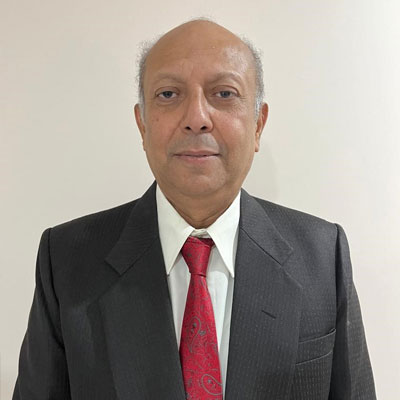
Dr Shantanu Banerjee

Dr Shantanu Banerjee is senior lecturer at Leaders Institute. With extensive experience in management, leadership, and administration across a range of contexts in India and Australia, Dr Banerjee is also currently an Industry Fellow at the University of Queensland Business School. His research focuses on socio-cultural-political contexts, particularly in the field of agribusiness and international business. His research has highlighted variations in the theme of international competitiveness by emphasising non-economic and non-market variables and on how multinational enterprises subsidiaries can pursue legitimacy pursuing non-market strategies. 

Dr Banerjee has presented his research work at esteemed international conferences such as ANZIBA and EIA and has published in scholarly journals including International Business Review and Management International Review. He graduated from the Institute of Foreign Trade, New Delhi (India) and the University of Queensland Business School. He has been an academic staff member at the University of Queensland and Queensland University of Technology, lecturing in undergraduate and postgraduate programs. Dr Banerjee has over 15 years of extensive and varied experience as an International Business Manager dealing and negotiating with overseas clients based in the United States of America, China, Japan, Canada, Switzerland, and Germany. He is currently employed with a Federal agency of the Australian Treasury. 

Qualifications

Doctor of Philosophy, University of Queensland, 2012

Master of Research, Queensland University of Technology, 2005

Master of Business, Queensland University of Technology, 2003

Postgraduate Diploma in International Trade, Indian Institute of Foreign Trade, 1986

Bachelor of Mechanical Engineering

Indian Institute of Foreign Trade, 1985


Communities of Practice

  • Editorial Board, Academy of International Business
  • Editorial Board, European Academy of Management
  • Editorial Board, Leadership & Management Studies in Sub-Sahara Africa Conference
  • Editorial Board, International Journal of Entrepreneurship and Small Business
Close

Associate Professor Ben Arachi

BIOGRAPHY

Associate Professor Ben Arachi has four decades (1977-2023) of experience in higher education leadership and teaching. During his 15 years as Unit Coordinator at Central Queensland University, he received two Excellence in Teaching Awards and was nominated for the Vice-Chancellor’s Award for Outstanding Contributions to Learning and Teaching and the Australian Awards for University Teaching. His online learning study was published in Economics for Today (Cengage 2022).

Previously, Associate Professor Arachi  served as Vice Principal, Head of the Department of Extension and Research, and Editor-in-Chief of the academic journal at Arul Anandar College, India (1992-1997). He was then Research Coordinator and Course Coordinator (1999-2008), as well as Chair of the Division of Economics (2000-2005) at HELP University, Malaysia. This included senior involvement in the application to become a University College and then a full University.

Associate Professor Arachi also has over 20 years of experience as a higher degree research supervisor, moderator, and examiner for doctoral degrees. In his five years as a Coordinator of All India Christian Higher Education, he organised numerous state-level seminars and workshops for academics in higher education in India. He has published four monographs, many research papers and articles while editing the Research AAC Journal of Economics. He has reviewed many higher education textbooks.

QUALIFICATIONS

  • Doctor of Philosophy, Madursi Kamaraj University, India, 1989

  • Master of Arts, University of Madras, 1975 (Gold Medalist)

  • Bachelor of Arts, Madursi Kamaraj University, India, 1973 (University Rank and Merit Scholarship)

  • Diploma in Applied Economics, Madursi Kamaraj University, India, 1980

ACADEMIC LEADERSHIP

  • Member, Academic Board, 2023-current

  • Chair, Examiners Committe, 2023-current

  • Member, Course Advisory Committee, 2022-current

AWARDS

  • Central Queensland University Student Voice Commendation. The 2021 program includes unit evaluation data from term 3, 2020 and terms 1 and 2, 2021.

  • Central Queensland University  Student Voice Commendation. The 2020 program includes unit evaluation data from term 3, 2019 and terms 1 and 2, 2020.

  • Central Queensland University Central Queensland University Platinum certificate Top rated Unit in Term 2, 2019

  • Central Queensland University Gold certificate Highly rated Unit in Term 2,2019 (ACCT20070)

  • Gold certificate Highly rated Unit in Term 2,2019 from CQU(ECON11026)

  • Charles Sturt University Excellence in Teaching Award (ECO511)

Close

Dr Bandula Nambukara-Gamage

Dr Bandula Nambukara-Gamage is a Senior Lecturer of Accounting and Finance at James Cook University, Brisbane campus. He currently teaches Bachelor of Commerce, Bachelor of Accounting, Master of Professional Accounting, and Master of Business Administration students based on the Brisbane campus. Dr Nambukara-Gamage has previously lectured at Central Queensland University, Federation University, and Charles Darwin University.

QUALIFICATIONS

Doctor of Philosophy, University of New England, 2013

Master of Commerce

Licentiate Certificate (recognised by the Institute of Chartered Accountants of Australia)

Bachelor of Business Administration (Honours)

Close

Professor Rod St Hill

Professor Rodney St Hill is the former President of Leaders Institute (2018-2020) and serves as Senior Pastor (2016-current) at IgniteLife Church Gold Coast, where he heads IgniteLife Business, an outreach to Christians in business. He is a leader in the global Business As Mission movement. He also consults on governance and executive management in higher education and business, with a particular special interest in Christian education institutions and businesses.

Previously, Professor St Hill was a long-term senior leader and Vice President Academic of Christian Heritage College, Brisbane. With the input of his colleagues and many others in his network, he developed business curriculum that embeds the ‘5 P missional business’ model – a model of production, people, planet, and profit. He was also Dean of Students, among other roles, at University of Southern Queensland (1993-2009).

QUALIFICATIONS

Doctor of Philosophy, University of Cantebury, 1989

Bachelor of Commerce (Hons 1), University of Newcastle, 1979

EXTERNAL EXPERT REVIEWER

External Member, various course assessment panels in business, management and leadership at Alphacrucis College, Australian College of Divinity, and Avondale University College, 2014 to 2020

Member: Australian Institute of Company Directors

COMMUNITIES OF PRACTICE

Member: Economic Society of Australia

External Expert, Tertiary Education Quality and Standards Agency (TEQSA), 2019-current

Close

Ps Duane Van Vuuren

Ps Duane Van Vuuren has served as Brisbane Campus Director, Postgraduate Leadership Studies Director, Unit Coordinator, and Lecturer at Alphacrucis University College. He also served as Executive Pastor at several churches across Australia.

Qualifications
Doctor of Philosophy in Leaders – candidate
Master of Arts
Master of Leadership
Graduate Certificate of Leadership

Close
Geoff Sheldon

Associate Professor Geoff Sheldon

Associate Professor Geoff Sheldon is a part-time Doctoral and Masters theses examiner for University of Southern Queensland and has been a visiting professor and guest lecturer at Bond University. He is the holder of a Doctorate of Policing and Security and a Master of Leadership, together with five other post and under-graduate qualifications. His distinguished Queensland policing career saw him serve across the entire state for just over 42 years (1982-2023), most recently in the Gold Coast and Cairns Districts at the level of Superintendent. He serves on multiple boards and charity committees.

Close

Information Communication and Technology Policy

PURPOSE

This policy details the parameters of Information, Communications, and Technology (ICT) access and help for staff, students, contractors, and visitors at Global Leadership Institute (GLI).

SCOPE

All staff, students, prospective students, contractors, and visitors

PRINCIPLES

ICT services support all GLI’s activities. The Institute ensures that:

  • appropriate training is provided during staff induction and student orientation, tutorials, study skills workshops, and other programs regarding the Institute’s Learning Management System, as well as other ICT software, such as Microsoft Office and Turnitin;
  • students have access to learning support services consistent with the requirements of their courses, modes of study, and learning needs. This includes arrangements for supporting and maintaining contact with students who are off campus or studying online;
  • students are aware of all support mechanisms to ensure they maximise GLI’s ICT services for their learning and are used for the correct means;
  • all non-current staff and student accounts are deleted to safeguard security and ensure that data and space is used efficiently;
  • students enrolled in a GLI course have ICT access and support for the duration of their enrolment;
  • student email addresses and ICT accounts are created for the purposes of all official communication between students and GLI. The Institute is responsible for protecting the privacy of student information and communications as required by the Privacy Act 1988. It is the responsibility of the students to activate their account once enrolment has been confirmed and maintain security of their personal information including for assessments.
  • all staff and enrolled students have 24/7 access to the GLI online learning management system and library resources;
  • units in the Learning Management System are accessible at least one (1) week prior to commencement of delivery;
  • all learning material for a unit is uploaded prior to commencement of delivery;
  • timely internet and computer access are provided to all staff and students on campus;
  • all use of generative artificial intelligence must adhere to the relevant GLI policies and procedures.

Acceptable Use of ICT Resources

GLI requires all users of its ICT resources to do so in an authorised, responsible, ethical, equitable, and legal manner in accordance with the Code of Conduct Policy and other relevant policies. The use of GLI’s ICT resources is subject to Australian laws. This includes, but is not limited to, copyright, breach of confidence, defamation, privacy, contempt of court, bullying, cyber-bullying, harassment, vilification, anti-discrimination, wilful damage, and computer hacking.

Acceptable Use of Generative Artificial Intelligence

At GLI, generative artificial intelligence may be used to support learning, teaching, scholarship, research, and operational activities, including but not limited to:

  • making operations more efficient (increasing consistency, speed, agility, and scalability);
  • adapting to changing technology;
  • improving speed and agility to identify issues and manage risks;
  • protecting the Institute’s physical and digital resources;
  • verifying identity and highlighting potential academic misconduct;
  • providing feedback to students;
  • identifying ‘at risk’ students to provide additional support;
  • engaging in student support activities;
  • improving student and staff experiences and/or capabilities.

GLI assesses and managers the use of generative artificial intelligence to ensure that human rights are protected.

PROCEDURES

The ICT Manager creates temporary passwords and accounts for all students prior to the commencement of semester. It is the responsibility of staff and students to activate their accounts. Assistance is provided by the ICT Manager as required.

Emails

  • Staff and students are allocated an email account that has a storage capacity of 15GB. Users receive automated alerts when usage of the email storage approaches and exceeds 95% of the storage limit.
  • When the above situation takes place students will not be able to send email but will continue to receive email;
  • When the capacity reaches 100%, students will not be able to receive or send email;
  • Students should contact the ICT Manager to help them archive their emails if required;
  • Students should contact the ICT Manager for all password resets to their accounts.

riate Use of ICT Resources/p>

Staff or students who undertake the following are in breach of the lawful use of GLI’s ICT resouces:

  • directly or indirectly breaching a Commonwealth Law or State Law;
  • directly or indirectly breaching the Code of Conduct Policy;
  • disregarding or disobeying the lawful direction provided by the appropriate authorities;
  • sharing access to the nominated ICT resources or facilities without the consent of the ICT Manager or delegated representative;
  • media storage devices such as external USB sticks, hard drives, etc. while using GLI’s ICT network;
  • acting in a manner that compromises the security, confidentiality, integrity, and availability of ICT resources and facilities. This includes, but is not limited to, purchased or commercial software, sound, graphics, images, or datasets; shareware; freeware; and electronically stored documentation and the media that holds it. This includes online services (i.e. software-as-a-service) licensed to GLI.

Notifying and Handling of Breaches

Users who become aware of a possible breach of this policy must report it to the ICT Manager or delegated representative. Breaches of this policy, as well as outstanding student fees and charges, may result in having an ICT account disabled. Staff or students who have their ICT account disabled have the right to access the relevant grievance policies.

GLI will report illegal activities and corrupt conduct to appropriate authorities. All ICT usage may be recorded for the purpose of security and risk management.

Cybersecurity Risk Management

Cybersecurity controls are in place to help reduce cybersecurity risk by either reducing the likelihood or impact of an incident, or both. GLI will identify and treat cybersecurity risk through the following processes:

  • keep and maintain a register of key information assets;
  • the ICT Manager shall use the established framework for performing cybersecurity risk assessments;
  • incorporate cybersecurity risk identification and assessment into processes impacting the use and processing of GLI resources and systems;
  • maintain a register of cybersecurity risks with related controls;
  • review risks at regular intervals, including significant security incidents, threats, or potential changes to business requirements;
  • implement and strengthen controls to reduce risk;
  • evaluate the effectiveness of controls.