Amazing Opportunities

for everyone

short linksApply Now

Financial Management Policy

PURPOSE

This policy details Global Leadership Institute’s (GLI) principles and processes for financial management and fraud prevention.

SCOPE

Whole Institute

PRINCIPLES

GLI ensures that:

  • accounting standards and systems and other records are maintained in accordance with required laws and legislations;
  • financial statements constitute a general-purpose financial report which has been prepared in accordance with Australian Accounting Standards, Statements of Accounting Concepts, and other authoritative pronouncements of the Australian Accounting Standards Board;
  • financial statements are prepared on the accrual basis of accounting using the historical cost convention, except for certain assets and liabilities which, as noted are measured at fair value;
  • GLI funds are only expended on goods and services for the purpose of the Institute;
  • all items purchased using GLI funds are the property of the Institute unless otherwise agreed in writing;
  • all financial transactions are properly documented and accurately recorded in a timely manner and in accordance with relevant laws and legislations;
  • a protected amount account is maintained in adherence to the Fees, Payment, and Tuition Assurance Policy;
  • all staff, contractors, and students of GLI are to act in an ethical and honest manner in all aspects of procurement and financial expenditure involving the Institute’s funds;
  • best practices are implemented to detect and prevent fraud;
  • there is zero tolerance of fraud and that all reported incidents of alleged fraud are investigated
  • a financial risk management and mitigation strategy is implemented for the prevention, identification, and management of fraud
  • all instances of suspected fraudulent or corrupt conduct exposed are investigated;
  • the management, discipline, or facilitation of the prosecution of those responsible for substantive fraud are prosecuted as appropriate.

GLI defines fraud any dishonest activity causing actual or potential loss to any person or entity including theft of money or the property of other employees or people external to the Institute and where deception is used immediately before or immediately following the activity. The deliberate falsification, destruction, concealment, or use of falsified documentation intended for use for a normal purpose or the improper use of information or a position for personal benefits.

All staff, students and prospective students of GLI are required to comply with this policy. Failure to do so may result in disciplinary actions and/or withdrawal of privileges, services, and facilities.

PROCEDURES
PROCEDURES FOR FINANCIAL MANAGEMENT
Non-current assets

  • GLI takes all reasonable steps to ensure that the assets recorded in the assets module of the finance system are correct.
  • For annual financial statement purposes, only capitalised assets are included.
  • Tangible Assets: purchases of assets with a cost and with a useful life of more than 12 months are capitalised as tangible assets.
  • GLI amortises intangible assets over a useful life of 10 years.
  • GLI arranges for an annual stock take of assets to:
    • verify the existence of assets listed at least up to the value threshold (80% or 100% depending on the cycle);
    • identify any changes to asset records;
    • identify any capital assets held that are not on the list.

GLI produces a statement verifying the assets held and advising any changes and will update the assets register to reflect the results of the stock take. The Institute uses a straight-line depreciation method to record the assets depreciation and amortisation, on an annual basis.

Recognition

Revenue is measured at the fair value of the consideration received or receivable and represents amounts receivable for goods and services provided in the normal course of business, net of discounts and Goods and Services Taxes (GST). Revenue is recognised as follows:

Fees and Charges

Revenue from tuition fees and charges are recognised in the accounting period in which the services are rendered, by reference to completion of the specific transaction assessed based on the actual service provided as a proportion of the total services to be provided.

Cash

For the purposes of the Statement of Cash Flows, cash includes cash at current bank accounts and term deposit bank accounts.

Receivables

Accounts receivable includes amounts due from students for tuition fees, and other enrolment related services and reimbursements due. Accounts receivables are recognised at the amounts receivable as they are due for settlement no more than 90 days from the date of recognition. Accounts receivables do not carry any interest.

Payables

Payables, including accruals not yet billed, are recognised when Governing Board becomes obliged to make future payments because of a purchase of assets or services. Accounts payable are not interest bearing and are stated at their nominal value. Unearned revenue is also recognised as current liability.

EMPLOYEE BENEFITS

Remuneration

GLI pays its employees based on their contracts and reviews annually. Academic staff are managed by the Academic Dean and are normally covered by professional indemnity and public liability insurances.

Annual Leave

Annual leave benefit is recognised at the reporting date in respect to employees’ services up to that date and is measured at the nominal amounts expected to be paid when the liabilities are settled.

Long Service Leave

The liability for long service leave expected to be settled within 12 months of the reporting date is recognised in the provision for employee benefits and is measured at the nominal amounts expected to be paid when the liability is settled. The liability for long service leave falling due more than 12 months after the reporting date is recognised in the provision for employee benefits and is measured at the present value of expected future payments to be made in respect of services provided by employees up to the reporting date.

On-Costs

On-costs arising from employee benefit obligations, when GLI has a present legal or constructive obligation because of past events, including payroll tax and worker’s compensation, are recognised together with employee benefits costs when the obligations to which they relate are recognised as liabilities and expenses. It is more likely than not that an outflow of resources will be required to settle the on-cost obligation, and the expected costs are accrued over the period of employment using the present value of the on-cost obligation at the reporting date.

Superannuation

GLI contributes to a superannuation fund on behalf of its employees at a rate of 10.5% of their salaries and wages. It will increase as required by regulatory changes.

Foreign Currency Translation

Transactions in currencies other than Australian dollars are recorded at the rates of exchange prevailing on the dates of the transactions. At each reporting date, monetary assets and liabilities that are denominated in foreign currencies are retranslated at the rates prevailing on the reporting date.

Taxation

The Institute’s income tax is prepared and lodged by an outside accountancy firm and audited by auditing firm.

Accounting Transaction

Accounting transactions and financial reports follow the Australian and International Accounting Standards. Processing of transactions is performed using recognised accounting software.

Financial Management System

Xero is used for company’s accounting records; hardcopy records are also retained and stored in locked filing cabinets. The Institute’s accounting transactions are daily managed and monitored by its CPA qualified accountant. To separate accounting duties, at least two people are allowed to access Xero and two people to manage the cash accounts.

Auditing Arrangements

GLI’s annual report is audited by a registered auditing firm every year.

Budget Monitoring

The monthly report will be compared with the budget. If there is a significant difference, Governing Board is informed and advises on any necessary adjustment.

FINANCIAL MANAGMENET FOR FRAUD PREVENTION AND DETECTION

Governing Board has oversight of GLI’s financial management through Finance and Budget Committee. The terms of reference for Finance and Budget Committee are listed in the Governing Board Standing Committees Terms of Reference Policy. GLI’s internal controls to detect and prevent fraud are outlined below.

Checks and balances

GLI uses a system of checks and balances to ensure no one person has control over all parts of a financial transaction. This includes:

  • purchases, payroll, and disbursements authorised by a designated officer;
  • separate handling (receipt and deposit) functions from record keeping functions (recording transactions and reconciling accounts);
  • separate purchasing functions from payables functions;
  • requiring supervisors to approve employees’ time sheets before payroll is prepared.

Monthly reconciliation of bank accounts

This includes:

  • requiring the reconciliation to be completed by an independent person who does not have bookkeeping responsibilities or require supervisory review of the reconciliation;
  • examining bank statements to make sure they are not issued out of sequence;
  • initialling and dating the bank statements or reconciliation report to document that a review and reconciliation was performed and file the bank statements and reconciliations.

Use of credit cards

This includes:

  • restricting the use of GLI credit cards and verifying all charges made to credit cards or accounts to ensure they are GLI business-related;
  • limiting the number of agency credit cards and users;
  • setting account limits with credit card companies or vendors;
  • informing employees of appropriate use of the Institute’s credit cards and purchases that are not allowed;
  • requiring employees to submit itemised, original receipts for all purchases;
  • independently examining credit card statements and corresponding receipts each month to determine whether charges are appropriate and related to agency business.

GLI assets

This includes:

  • examining expense reports, credit card charges, and telephone bills periodically to determine whether charges are appropriate and related to the Institute’s business;
  • maintaining an equipment list and periodically complete an equipment inventory.

Petty cash

This includes:

  • limiting access to petty cash funds, keeping funds in a locked box or drawer, and restricting the number of employees who have access to the key;
  • requiring receipts for all petty cash disbursements with the date, amount received, purpose or use for the funds, and name of the employee receiving the funds listed on the receipt;
  • reconciling the petty cash fund before replenishing it;
  • limiting the petty cash replenishment amount to a total that will require replenishment at least monthly.




Fact Box

Owner : Chair, Governing Board

Approval Body : Governing Board

Endorsement Body : Executive Management Team

Category : Finance

Approval Date :

Review Date :

Version :

Close

Associate Professor Jason Hartley

Jason Hartley is lecturer in criminology at Griffith University in Brisbane, Australia. He is a former police officer with 23 years of experience, and has trained personnel for deployment in Timor Leste, the Solomon Islands, Iraq and Afghanistan. Jason specializes in, and has published on engagement with Muslim communities, Indigenous Polynesian approaches to rehabilitation and reducing recidivism, and Asian Organised Crime. Jason also completed a community internship in Hebron on the West Bank.

Close

Professor Grant Pitman

Professor Grant Pitman is the president of the Global Leadership Institute. He has held senior leadership roles in government such as Chief Superintendent of Police and Director of Strategic Planning ICT in the Queensland Police Service;

  • Varied list of contributions to law enforcement, including disaster management, auditing and finance, organizational reform, education and human resources, and policy development
  • National, state, and regional levels of professional service, including the Ipswich Economic Forum, the Brisbane Airport Emergency Planning Committee, the National Emergency Communications Working Group, the National Police Drug and Alcohol Task Force, and the Police Education Advisory Council.

He has a Ph.D. and Master of Administration from Griffith University. He is a well-versed researcher and has published numerous articles and journals.

Close

Professor Kevin Tickle

Professor Kevin Tickle has extensive experience in Executive Management roles in the tertiary education sector, both public and private, over the last two decades and has been a consultant to Higher Education providers in Australia and overseas. His primary areas of interest are Leadership, Management, Information Technology, Mathematics and Statistics with expertise in the areas of probability modelling; decision support, and data analytics. He is currently a Fellow of the Australian Institute of Management, a member of the Institution of Engineers, Australia, the Australian Computer Society and an Emeritus Professor at CQUniversity.

Close

Mr Des Lacy OAM

Des serves as Secretary/Treasurer of the Asia Pacific Chapter of FBI National Academy Associates, after completing 40 years in the Queensland Police Service. During his distinguished career, Des was District Officer (A/Chief Superintendent) in Charge of the Gold Coast Police District, Police Commander for the Gold Coast Indy, Super V8s, Gold Coast Marathon, and Schoolies, as well as National Rugby League and Australian Foot League events in Brisbane and the Gold Coast. Des oversaw development and implementation of the Integrated Justice Information Systems, Integrated Traffic Policing Program, and Integrated Tasking and Analysis System. He served as Director of the Strategic Services Branch and Information and Communications Technology Command, as well as Chair of the District Disaster Management Group and Security Operations Coordinator for the 2018 Commonwealth Games. 

Des has been a member of Rotary International for 30 years, representing Rotary International in the United States and the Middle East. For his work in the Gold Coast Community Des was awarded Citizen of the Year at the 2013 Gold Coast Australia Day celebrations. Des also was one of the founding Directors for the Oxenford and Coomera Community Youth Centre that provides much needed social services to the Northern Gold Coast Community. For the past 15 years, he has also been the Chair of this not-for-profit establishment. It. For his work promoting International Law Enforcement Des was awarded the Order of Australia Medal in 2017.

Qualifications

Graduate Diploma of Management

Graduate Certificate Business Management 

Bachelor of Business

Close

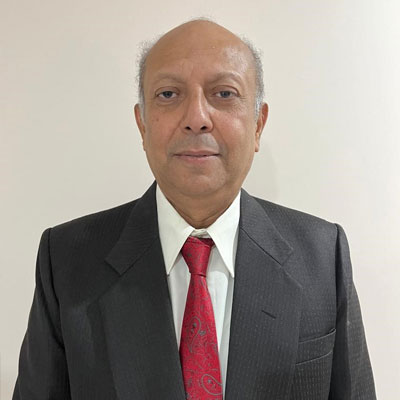
Dr Shantanu Banerjee

Dr Shantanu Banerjee is senior lecturer at Leaders Institute. With extensive experience in management, leadership, and administration across a range of contexts in India and Australia, Dr Banerjee is also currently an Industry Fellow at the University of Queensland Business School. His research focuses on socio-cultural-political contexts, particularly in the field of agribusiness and international business. His research has highlighted variations in the theme of international competitiveness by emphasising non-economic and non-market variables and on how multinational enterprises subsidiaries can pursue legitimacy pursuing non-market strategies. 

Dr Banerjee has presented his research work at esteemed international conferences such as ANZIBA and EIA and has published in scholarly journals including International Business Review and Management International Review. He graduated from the Institute of Foreign Trade, New Delhi (India) and the University of Queensland Business School. He has been an academic staff member at the University of Queensland and Queensland University of Technology, lecturing in undergraduate and postgraduate programs. Dr Banerjee has over 15 years of extensive and varied experience as an International Business Manager dealing and negotiating with overseas clients based in the United States of America, China, Japan, Canada, Switzerland, and Germany. He is currently employed with a Federal agency of the Australian Treasury. 

Qualifications

Doctor of Philosophy, University of Queensland, 2012

Master of Research, Queensland University of Technology, 2005

Master of Business, Queensland University of Technology, 2003

Postgraduate Diploma in International Trade, Indian Institute of Foreign Trade, 1986

Bachelor of Mechanical Engineering

Indian Institute of Foreign Trade, 1985


Communities of Practice

  • Editorial Board, Academy of International Business
  • Editorial Board, European Academy of Management
  • Editorial Board, Leadership & Management Studies in Sub-Sahara Africa Conference
  • Editorial Board, International Journal of Entrepreneurship and Small Business
Close

Associate Professor Ben Arachi

BIOGRAPHY

Associate Professor Ben Arachi has four decades (1977-2023) of experience in higher education leadership and teaching. During his 15 years as Unit Coordinator at Central Queensland University, he received two Excellence in Teaching Awards and was nominated for the Vice-Chancellor’s Award for Outstanding Contributions to Learning and Teaching and the Australian Awards for University Teaching. His online learning study was published in Economics for Today (Cengage 2022).

Previously, Associate Professor Arachi  served as Vice Principal, Head of the Department of Extension and Research, and Editor-in-Chief of the academic journal at Arul Anandar College, India (1992-1997). He was then Research Coordinator and Course Coordinator (1999-2008), as well as Chair of the Division of Economics (2000-2005) at HELP University, Malaysia. This included senior involvement in the application to become a University College and then a full University.

Associate Professor Arachi also has over 20 years of experience as a higher degree research supervisor, moderator, and examiner for doctoral degrees. In his five years as a Coordinator of All India Christian Higher Education, he organised numerous state-level seminars and workshops for academics in higher education in India. He has published four monographs, many research papers and articles while editing the Research AAC Journal of Economics. He has reviewed many higher education textbooks.

QUALIFICATIONS

  • Doctor of Philosophy, Madursi Kamaraj University, India, 1989

  • Master of Arts, University of Madras, 1975 (Gold Medalist)

  • Bachelor of Arts, Madursi Kamaraj University, India, 1973 (University Rank and Merit Scholarship)

  • Diploma in Applied Economics, Madursi Kamaraj University, India, 1980

ACADEMIC LEADERSHIP

  • Member, Academic Board, 2023-current

  • Chair, Examiners Committe, 2023-current

  • Member, Course Advisory Committee, 2022-current

AWARDS

  • Central Queensland University Student Voice Commendation. The 2021 program includes unit evaluation data from term 3, 2020 and terms 1 and 2, 2021.

  • Central Queensland University  Student Voice Commendation. The 2020 program includes unit evaluation data from term 3, 2019 and terms 1 and 2, 2020.

  • Central Queensland University Central Queensland University Platinum certificate Top rated Unit in Term 2, 2019

  • Central Queensland University Gold certificate Highly rated Unit in Term 2,2019 (ACCT20070)

  • Gold certificate Highly rated Unit in Term 2,2019 from CQU(ECON11026)

  • Charles Sturt University Excellence in Teaching Award (ECO511)

Close

Dr Bandula Nambukara-Gamage

Dr Bandula Nambukara-Gamage is a Senior Lecturer of Accounting and Finance at James Cook University, Brisbane campus. He currently teaches Bachelor of Commerce, Bachelor of Accounting, Master of Professional Accounting, and Master of Business Administration students based on the Brisbane campus. Dr Nambukara-Gamage has previously lectured at Central Queensland University, Federation University, and Charles Darwin University.

QUALIFICATIONS

Doctor of Philosophy, University of New England, 2013

Master of Commerce

Licentiate Certificate (recognised by the Institute of Chartered Accountants of Australia)

Bachelor of Business Administration (Honours)

Close

Professor Rod St Hill

Professor Rodney St Hill is the former President of Leaders Institute (2018-2020) and serves as Senior Pastor (2016-current) at IgniteLife Church Gold Coast, where he heads IgniteLife Business, an outreach to Christians in business. He is a leader in the global Business As Mission movement. He also consults on governance and executive management in higher education and business, with a particular special interest in Christian education institutions and businesses.

Previously, Professor St Hill was a long-term senior leader and Vice President Academic of Christian Heritage College, Brisbane. With the input of his colleagues and many others in his network, he developed business curriculum that embeds the ‘5 P missional business’ model – a model of production, people, planet, and profit. He was also Dean of Students, among other roles, at University of Southern Queensland (1993-2009).

QUALIFICATIONS

Doctor of Philosophy, University of Cantebury, 1989

Bachelor of Commerce (Hons 1), University of Newcastle, 1979

EXTERNAL EXPERT REVIEWER

External Member, various course assessment panels in business, management and leadership at Alphacrucis College, Australian College of Divinity, and Avondale University College, 2014 to 2020

Member: Australian Institute of Company Directors

COMMUNITIES OF PRACTICE

Member: Economic Society of Australia

External Expert, Tertiary Education Quality and Standards Agency (TEQSA), 2019-current

Close

Ps Duane Van Vuuren

Ps Duane Van Vuuren has served as Brisbane Campus Director, Postgraduate Leadership Studies Director, Unit Coordinator, and Lecturer at Alphacrucis University College. He also served as Executive Pastor at several churches across Australia.

Qualifications
Doctor of Philosophy in Leaders – candidate
Master of Arts
Master of Leadership
Graduate Certificate of Leadership

Close
Geoff Sheldon

Associate Professor Geoff Sheldon

Associate Professor Geoff Sheldon is a part-time Doctoral and Masters theses examiner for University of Southern Queensland and has been a visiting professor and guest lecturer at Bond University. He is the holder of a Doctorate of Policing and Security and a Master of Leadership, together with five other post and under-graduate qualifications. His distinguished Queensland policing career saw him serve across the entire state for just over 42 years (1982-2023), most recently in the Gold Coast and Cairns Districts at the level of Superintendent. He serves on multiple boards and charity committees.

Close

Financial Management Policy

PURPOSE

This policy details Global Leadership Institute’s (GLI) principles and processes for financial management and fraud prevention.

SCOPE

Whole Institute

PRINCIPLES

GLI ensures that:

  • accounting standards and systems and other records are maintained in accordance with required laws and legislations;
  • financial statements constitute a general-purpose financial report which has been prepared in accordance with Australian Accounting Standards, Statements of Accounting Concepts, and other authoritative pronouncements of the Australian Accounting Standards Board;
  • financial statements are prepared on the accrual basis of accounting using the historical cost convention, except for certain assets and liabilities which, as noted are measured at fair value;
  • GLI funds are only expended on goods and services for the purpose of the Institute;
  • all items purchased using GLI funds are the property of the Institute unless otherwise agreed in writing;
  • all financial transactions are properly documented and accurately recorded in a timely manner and in accordance with relevant laws and legislations;
  • a protected amount account is maintained in adherence to the Fees, Payment, and Tuition Assurance Policy;
  • all staff, contractors, and students of GLI are to act in an ethical and honest manner in all aspects of procurement and financial expenditure involving the Institute’s funds;
  • best practices are implemented to detect and prevent fraud;
  • there is zero tolerance of fraud and that all reported incidents of alleged fraud are investigated
  • a financial risk management and mitigation strategy is implemented for the prevention, identification, and management of fraud
  • all instances of suspected fraudulent or corrupt conduct exposed are investigated;
  • the management, discipline, or facilitation of the prosecution of those responsible for substantive fraud are prosecuted as appropriate.

GLI defines fraud any dishonest activity causing actual or potential loss to any person or entity including theft of money or the property of other employees or people external to the Institute and where deception is used immediately before or immediately following the activity. The deliberate falsification, destruction, concealment, or use of falsified documentation intended for use for a normal purpose or the improper use of information or a position for personal benefits.

All staff, students and prospective students of GLI are required to comply with this policy. Failure to do so may result in disciplinary actions and/or withdrawal of privileges, services, and facilities.

PROCEDURES
PROCEDURES FOR FINANCIAL MANAGEMENT
Non-current assets

  • GLI takes all reasonable steps to ensure that the assets recorded in the assets module of the finance system are correct.
  • For annual financial statement purposes, only capitalised assets are included.
  • Tangible Assets: purchases of assets with a cost and with a useful life of more than 12 months are capitalised as tangible assets.
  • GLI amortises intangible assets over a useful life of 10 years.
  • GLI arranges for an annual stock take of assets to:
    • verify the existence of assets listed at least up to the value threshold (80% or 100% depending on the cycle);
    • identify any changes to asset records;
    • identify any capital assets held that are not on the list.

GLI produces a statement verifying the assets held and advising any changes and will update the assets register to reflect the results of the stock take. The Institute uses a straight-line depreciation method to record the assets depreciation and amortisation, on an annual basis.

Recognition

Revenue is measured at the fair value of the consideration received or receivable and represents amounts receivable for goods and services provided in the normal course of business, net of discounts and Goods and Services Taxes (GST). Revenue is recognised as follows:

Fees and Charges

Revenue from tuition fees and charges are recognised in the accounting period in which the services are rendered, by reference to completion of the specific transaction assessed based on the actual service provided as a proportion of the total services to be provided.

Cash

For the purposes of the Statement of Cash Flows, cash includes cash at current bank accounts and term deposit bank accounts.

Receivables

Accounts receivable includes amounts due from students for tuition fees, and other enrolment related services and reimbursements due. Accounts receivables are recognised at the amounts receivable as they are due for settlement no more than 90 days from the date of recognition. Accounts receivables do not carry any interest.

Payables

Payables, including accruals not yet billed, are recognised when Governing Board becomes obliged to make future payments because of a purchase of assets or services. Accounts payable are not interest bearing and are stated at their nominal value. Unearned revenue is also recognised as current liability.

EMPLOYEE BENEFITS

Remuneration

GLI pays its employees based on their contracts and reviews annually. Academic staff are managed by the Academic Dean and are normally covered by professional indemnity and public liability insurances.

Annual Leave

Annual leave benefit is recognised at the reporting date in respect to employees’ services up to that date and is measured at the nominal amounts expected to be paid when the liabilities are settled.

Long Service Leave

The liability for long service leave expected to be settled within 12 months of the reporting date is recognised in the provision for employee benefits and is measured at the nominal amounts expected to be paid when the liability is settled. The liability for long service leave falling due more than 12 months after the reporting date is recognised in the provision for employee benefits and is measured at the present value of expected future payments to be made in respect of services provided by employees up to the reporting date.

On-Costs

On-costs arising from employee benefit obligations, when GLI has a present legal or constructive obligation because of past events, including payroll tax and worker’s compensation, are recognised together with employee benefits costs when the obligations to which they relate are recognised as liabilities and expenses. It is more likely than not that an outflow of resources will be required to settle the on-cost obligation, and the expected costs are accrued over the period of employment using the present value of the on-cost obligation at the reporting date.

Superannuation

GLI contributes to a superannuation fund on behalf of its employees at a rate of 10.5% of their salaries and wages. It will increase as required by regulatory changes.

Foreign Currency Translation

Transactions in currencies other than Australian dollars are recorded at the rates of exchange prevailing on the dates of the transactions. At each reporting date, monetary assets and liabilities that are denominated in foreign currencies are retranslated at the rates prevailing on the reporting date.

Taxation

The Institute’s income tax is prepared and lodged by an outside accountancy firm and audited by auditing firm.

Accounting Transaction

Accounting transactions and financial reports follow the Australian and International Accounting Standards. Processing of transactions is performed using recognised accounting software.

Financial Management System

Xero is used for company’s accounting records; hardcopy records are also retained and stored in locked filing cabinets. The Institute’s accounting transactions are daily managed and monitored by its CPA qualified accountant. To separate accounting duties, at least two people are allowed to access Xero and two people to manage the cash accounts.

Auditing Arrangements

GLI’s annual report is audited by a registered auditing firm every year.

Budget Monitoring

The monthly report will be compared with the budget. If there is a significant difference, Governing Board is informed and advises on any necessary adjustment.

FINANCIAL MANAGMENET FOR FRAUD PREVENTION AND DETECTION

Governing Board has oversight of GLI’s financial management through Finance and Budget Committee. The terms of reference for Finance and Budget Committee are listed in the Governing Board Standing Committees Terms of Reference Policy. GLI’s internal controls to detect and prevent fraud are outlined below.

Checks and balances

GLI uses a system of checks and balances to ensure no one person has control over all parts of a financial transaction. This includes:

  • purchases, payroll, and disbursements authorised by a designated officer;
  • separate handling (receipt and deposit) functions from record keeping functions (recording transactions and reconciling accounts);
  • separate purchasing functions from payables functions;
  • requiring supervisors to approve employees’ time sheets before payroll is prepared.

Monthly reconciliation of bank accounts

This includes:

  • requiring the reconciliation to be completed by an independent person who does not have bookkeeping responsibilities or require supervisory review of the reconciliation;
  • examining bank statements to make sure they are not issued out of sequence;
  • initialling and dating the bank statements or reconciliation report to document that a review and reconciliation was performed and file the bank statements and reconciliations.

Use of credit cards

This includes:

  • restricting the use of GLI credit cards and verifying all charges made to credit cards or accounts to ensure they are GLI business-related;
  • limiting the number of agency credit cards and users;
  • setting account limits with credit card companies or vendors;
  • informing employees of appropriate use of the Institute’s credit cards and purchases that are not allowed;
  • requiring employees to submit itemised, original receipts for all purchases;
  • independently examining credit card statements and corresponding receipts each month to determine whether charges are appropriate and related to agency business.

GLI assets

This includes:

  • examining expense reports, credit card charges, and telephone bills periodically to determine whether charges are appropriate and related to the Institute’s business;
  • maintaining an equipment list and periodically complete an equipment inventory.

Petty cash

This includes:

  • limiting access to petty cash funds, keeping funds in a locked box or drawer, and restricting the number of employees who have access to the key;
  • requiring receipts for all petty cash disbursements with the date, amount received, purpose or use for the funds, and name of the employee receiving the funds listed on the receipt;
  • reconciling the petty cash fund before replenishing it;
  • limiting the petty cash replenishment amount to a total that will require replenishment at least monthly.